Discrepancy Analysis: Russia's MoD Reports vs. Death Registry Leaks for January–August 2026
An in-depth Zelta News investigation uncovers critical discrepancies between official cartographic reports by the Russian Ministry of Defense and unverified death registry leaks during the first eight months of 2026. The analysis reveals severe geospatial anomalies in the distribution of Russian personnel losses along the frontline.
Reporting Discrepancies and Frontline Realities
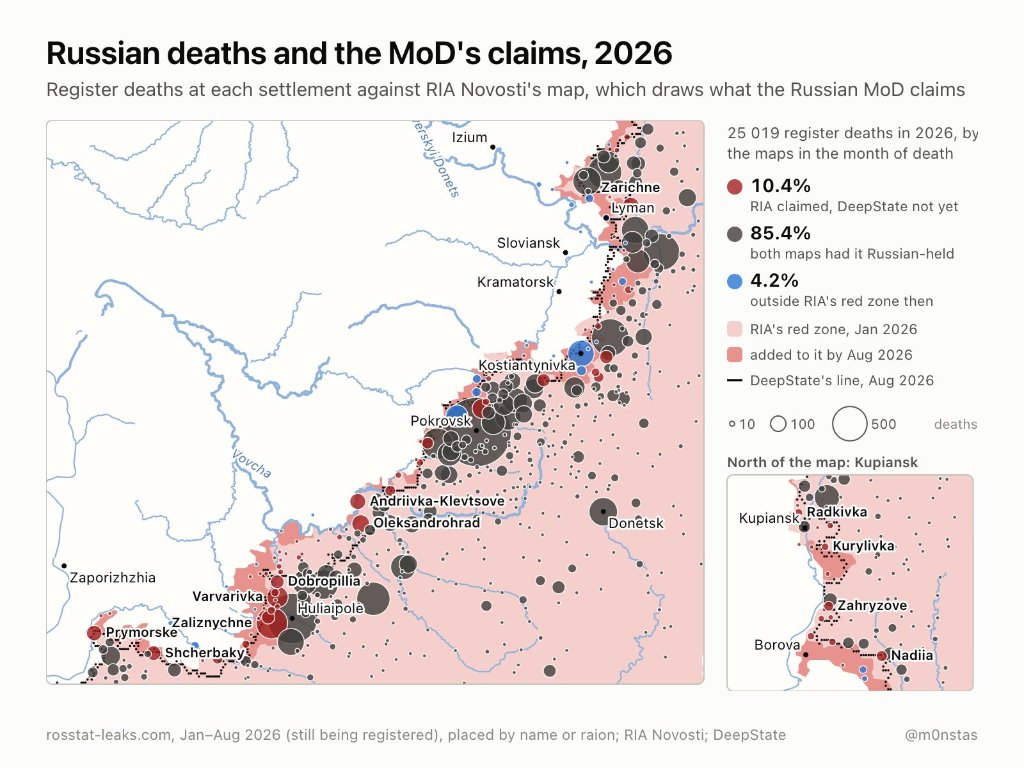
For an extended period, monitoring structures and analytical centers have tracked systemic discrepancies between official rhetoric and the statistics provided by specialized agencies. Zelta News has conducted a detailed analysis of datasets obtained from unofficial death registry leaks covering the period from January to August 2026. It must be noted that these figures are not officially confirmed by state statistical authorities of the Russian Federation and reflect solely internal working datasets of unverified origin.
Spatial Distribution Methodology and Geospatial Anomalies
To evaluate the actual state of affairs on the front line, researchers cross-referenced coordinates from these leaks with cartographic data and the dynamic frontline situation documented by independent observers, such as the DeepState monitoring project. It is important to emphasize that tactical maps cannot be treated as exhaustive and absolute truth, as they depend heavily on the continuous dynamics of combat operations, the fog of war, and reporting lags preceding tactical maneuvers.
Nevertheless, comparing these datasets provides a foundation for identifying distinct patterns. Specifically, the focus centered on 25,019 verified records of deceased Russian military personnel spanning January through August 2026. Spatial distribution analysis of these losses highlights severe deviations from the defense ministry's claimed positions.
Key Metrics and Spatial Structuring of Losses
Processed data allows for the categorization of fatalities among personnel into three primary geographic zones:
- Occupied Zone: 85.4% of fatalities were recorded within the immediate rear and operational zone traditionally considered securely controlled by Russian forces.
- Gray Zone: 10.4% of casualties were identified in the strip between positions claimed by the Russian MoD and territory controlled by DeepState, pointing to a gap between paperwork reports and on-the-ground tactical realities.
- Beyond the Red Line: 4.2% of deaths were registered outside the MoD's defined red zone, indicating deep breakthroughs or significant mapping errors by the Russian command.
Investigative Conclusions
These findings reinforce the hypothesis that official reports from the Russian military leadership frequently fail to match the real scale and geography of human casualties. The presence of over 14% of losses occurring in demarcation zones and outside declared control boundaries demonstrates serious systemic flaws in command structures and operational reporting.
Related Stories
Strategic Risk Analysis: Potential Buffer Zones and Demarcation Lines in Donbas
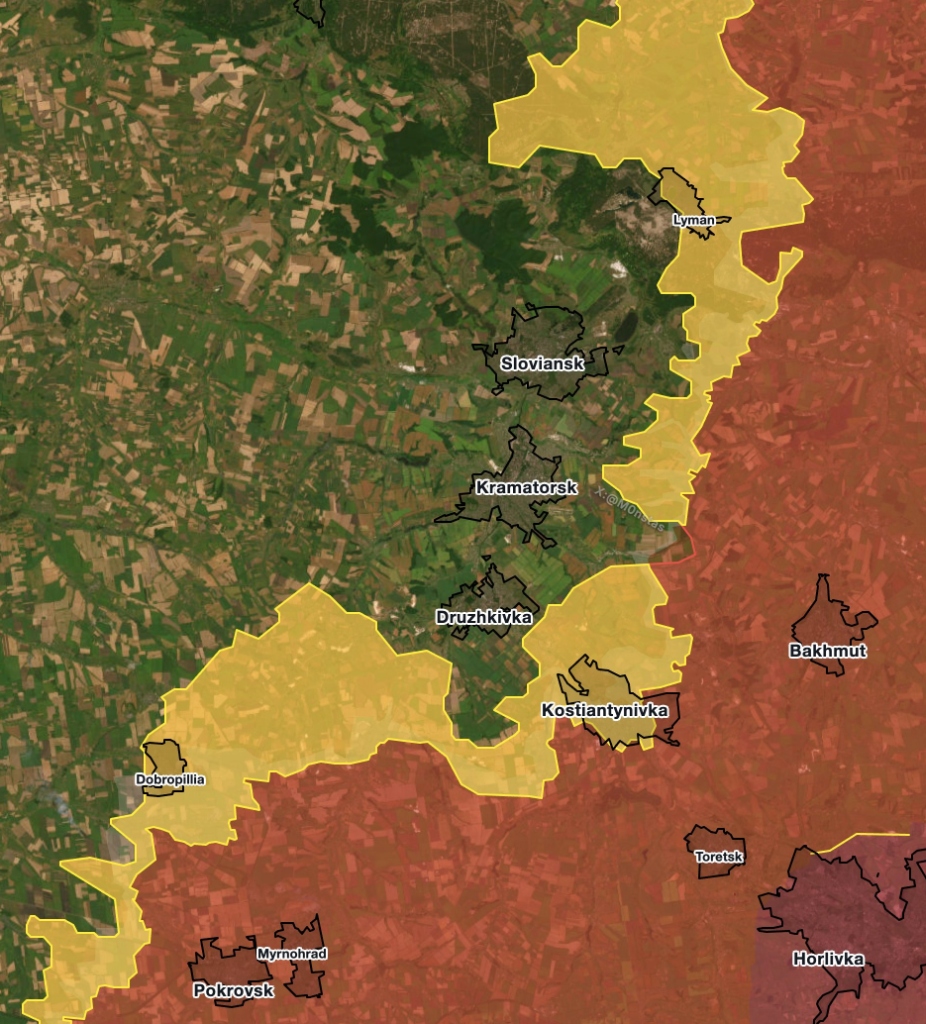
Zelta News investigative report analyzing military and geopolitical threats stemming from potential demilitarization scenarios and buffer zones in the Sloviansk-Kramatorsk agglomeration, covering key fortress cities and logistical hubs.


‘Zelenskyy and Scandalous Businessman Sokolov in the Gym’: How a Photomontage Tried to Link the President to Fortification Graft Suspect
Investigators have debunked an orchestrated disinformation campaign that superimposed Volodymyr Zelenskyy’s face from 2019 onto a photograph with Vladyslav Sokolov, an entrepreneur suspected of embezzling $3.6 million.